Rise Of The Fallen Death Of Mankind
First-person stage-based game made in Unreal Engine
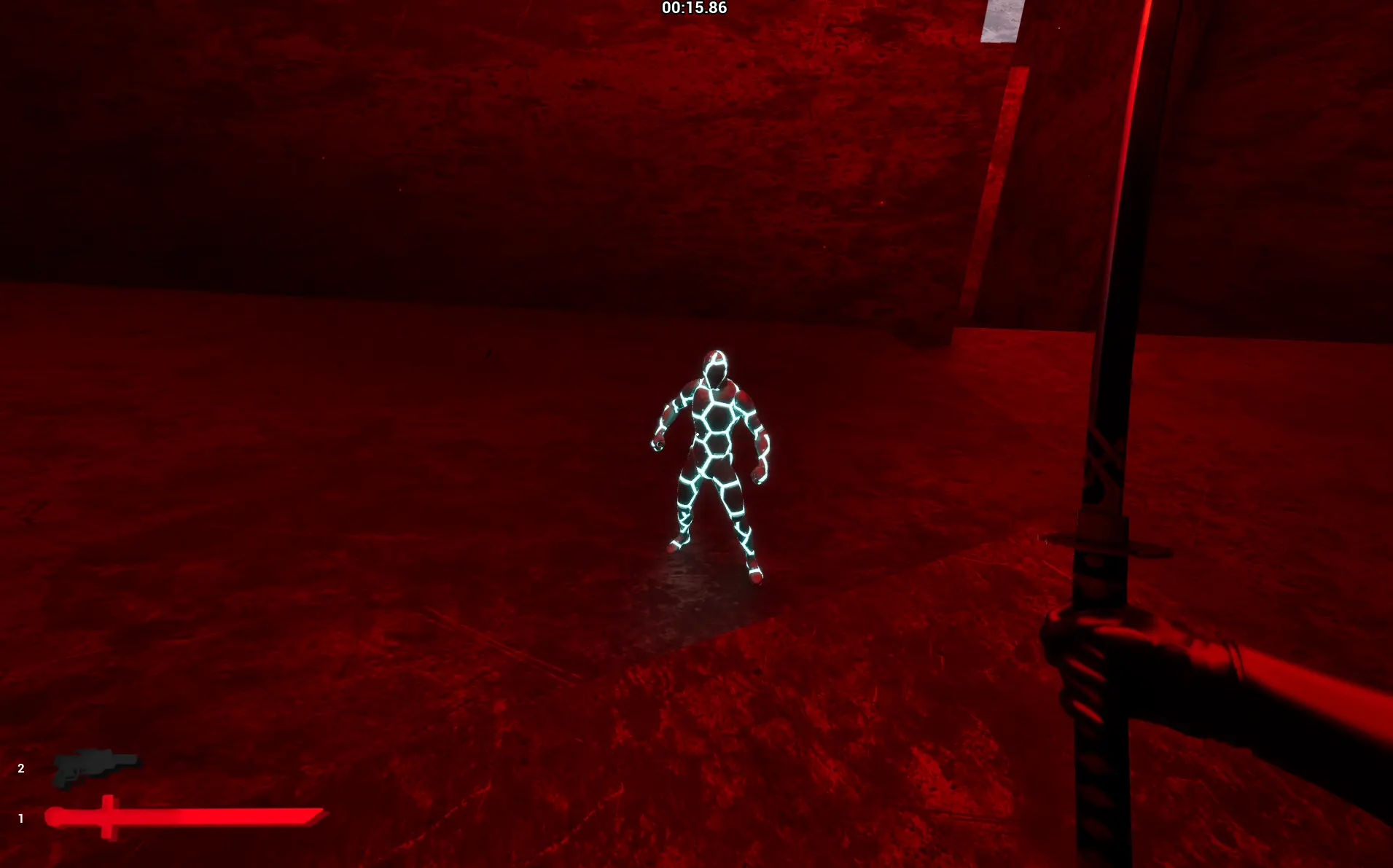
Play as a demon unleashed from hell, tearing through human forces across multiple stages. Fight, dash, and push forward until the world burns.
First-person stage-based game made in Unreal Engine
Play as a demon unleashed from hell, tearing through human forces across multiple stages. Fight, dash, and push forward until the world burns.
Overview & Teamwork
Rise Of The Fallen - Death Of Mankind is a first-person stage-based game developed in Unreal Engine by a team of three as an OSAO school project. Our main goal was to continue exploring different game engines and programming languages while working together as a team. We used Trello for task management and created a story outline and game loop document to organize our ideas and communicate as a team. We started with four members but lost one early on when he moved to other projects, leaving us a person short for most of development.
Game Concept & Design
The main concept was a stage-based game where the player explores levels, defeats enemies, and progresses deeper into the world. The story follows a demon who survived a war against humans and their advanced technology, now rampaging through the human world after escaping hell. When planning the story, my main goal was to give the player a clear reason to keep moving forward.
My Role & Challenges
My main responsibilities included animations, player and enemy coding, GitHub repository management, and project management, though as the project progressed, the workload gradually shifted and many tasks outside my original role ended up falling to me. We held daily check-ins to distribute tasks and tried to assign work in a way that avoided creating blockers for others, but keeping that balance was not always possible.
I created animations in Blender using the standard Unreal human skeleton and studied animation tutorials to improve my technique. I used pose references from Pinterest and sites like Sketchfab, as well as my own hands as reference. One interesting insight was that first-person animations do not need to be realistic; an exaggerated arm swing looks right at gameplay speed, but would look completely wrong slowed down or in third person.
I also handled enemy animations using premade animations and built the enemy behavior tree. In my opinion, Unreal's behavior tree system is harder to work with than a script-based state machine; sharing data like booleans behaves differently depending on whether you are in the animation editor, UI, or code, which made things confusing when switching between tasks. Unreal is a very powerful engine, but the interface inconsistency and default settings like forced blurriness made it harder to get started cleanly.
Project Outcome & Lessons Learned
By the end, our team completed one enemy with a behavior tree, animations and attacks, and a player with movement including dash, run, jump, and slide, along with the full animation blueprint and three short levels with enemies, weapons, and a main UI. Because team members had different skill levels and motivation, many tasks ended up with me. It was challenging, but I learned a lot. Looking back, building the project in incremental versions throughout development and scoping the game smaller from the start would have led to a much smoother project.
| Genre: | First-Person Stage-Based Shooter |
| Project Timeline: | Aug 19, 2025 - Dec 19, 2025 |
| Project Status: | Demo |
| Game engine: | Unreal Engine 5.6.1 |
| Programming language: | Unreal Engine 5.6.1 Blueprints |
| Team size: | 3 |
| Main Roles: | 3D Artist, Animator, Player Programmer, Enemy Programmer, Repository Manager & Project Manager |
| Art tool: | Blender 5.0.1 |
Check out my code, download the desktop version, or play it in your browser